---
title: The Case for Leaving Your Leaves for Wildlife This Fall
description: Discover the benefits of leaving fallen leaves in your yard for local wildlife, your garden, and climate change. Embrace nature's free resources this autumn.
image: https://content.gardenforwildlife.com/hubfs/Canva%20images/Leaves%20Blog.png
---
[Skip to content](https://content.gardenforwildlife.com/learn/the-case-for-leaving-your-leaves-for-wildlife-this-fall#main-content)
[](https://content.gardenforwildlife.com/)
- Get Involved
[**At Home**](https://content.gardenforwildlife.com/get-involved/at-home)
From planting a garden to spreading the word about native plants, everyone can take action.
[**At School**](https://content.gardenforwildlife.com/get-involved/at-school)
From pre-school through university, there's a program for students, faculty, and parents to get involved.
[**At Work**](https://content.gardenforwildlife.com/get-involved/at-work)
Bloom where you work. Give the gift of native plants and improve well-being in the workplace.
[**At Worship**](https://content.gardenforwildlife.com/get-involved/at-worship)
Transform places of worship into havens for wildlife and community engagement.
[**In Your Community**](https://content.gardenforwildlife.com/get-involved/in-your-community)
Where community thrives, nature blooms. Nurture your local community with native plants!
[**In Your State**](https://content.gardenforwildlife.com/get-involved/in-your-state)
Meet the organizations in your state supporting wildlife through the power of native plants.
[**Grower Network**](https://content.gardenforwildlife.com/get-involved/grower-network)
Support local growers, nurture sustainable practices, and cultivate a healthier planet.
[Launch a Fundraiser](https://content.gardenforwildlife.com/get-involved/fundraising)
[Register as an Affiliate](https://content.gardenforwildlife.com/get-involved/affiliates)
[See More Ways to Get Involved](https://content.gardenforwildlife.com/get-involved)
- About Us
[Who We Are](https://content.gardenforwildlife.com/about-us)
[Impact](https://content.gardenforwildlife.com/about-us/impact)
[Our Roots](https://content.gardenforwildlife.com/about-us/our-roots)
[Our Values](https://content.gardenforwildlife.com/our-core-values-and-focus)
[Partners](https://content.gardenforwildlife.com/about-us/partners)
[News & Press](https://content.gardenforwildlife.com/about-us/news)
[Contact Us](https://content.gardenforwildlife.com/about-us/contact)
- [Learn](https://content.gardenforwildlife.com/learn)
- [Certify](https://certifiedwildlifehabitat.nwf.org?campaignid=WH25VSL)
[Shop](https://gardenforwildlife.com)
[Shop](https://gardenforwildlife.com)
This is a search field with an auto-suggest feature attached.
- There are no suggestions because the search field is empty.
# The Case for Leaving Your Leaves for Wildlife This Fall
By [Julie Anne Dellinger | October 8, 2026](https://content.gardenforwildlife.com/learn/author/julie-anne-dellinger)
Discover the benefits of leaving fallen leaves in your yard for local wildlife, your garden, and climate change. Embrace nature's free resources this autumn.
[](https://content.gardenforwildlife.com/hs/cta/wi/redirect?encryptedPayload=AVxigLIePz407JmqgdiVYTUu2QUBbjZfC7AVRTWEQhwUBv0dZqBpcUabJrpYADNQu6MrjHsHoiBRVAHVkKRQXayHmPon4eptTQQhodb8Vrbj3FRxsgJ9jdbilEVEGUZWkveajfHfpJ4PZhgAxrX%2BUTVi7fjpTLZG%2ByU18jGXgkbrRLF9D%2F6O0ll8yR2mOvZXnCXS8kVlcDN3lAT8W468Z7j8USapqfq1GL7YetcJ2rjaAH7%2F6j0yFRCKb7OyTlaVPgEU&webInteractiveContentId=160479738010&portalId=43941187)
Every autumn, millions of homeowners across North America spend hours raking, blowing, and bagging leaves—only to send them straight to the landfill. But what if those fallen leaves aren't yard waste at all?
According to [National Wildlife Federation naturalist David Mizejewski](https://naturalist.nwf.org/), fallen leaves are one of the most valuable, free resources you can keep on your property for both your garden and local wildlife.
In our [recent live stream](https://www.youtube.com/live/2xymgtXaXXI), David made a compelling case for "leaving the leaves" and shared practical strategies for doing it without sacrificing curb appeal or smothering your lawn.
## 1. Fallen Leaves Are Free Mulch and Fertilizer
In nature, leaves drop to the base of trees and shrubs to form a protective layer that suppresses weeds, retains soil moisture, and slowly decomposes—returning vital nutrients directly to the soil.
"Mother Nature has already provided it for you," Mizejewski explains. "The garden industry has trained us to believe the only right thing to do in the fall is to get rid of all those leaves and then turn around and spend money to buy mulch and fertilizer."
By keeping a **3- to 6-inch layer of leaves** in your garden beds, you mimic this natural cycle, improve soil health, and save money.
## 2. Local Wildlife Depends on the Leaf Layer
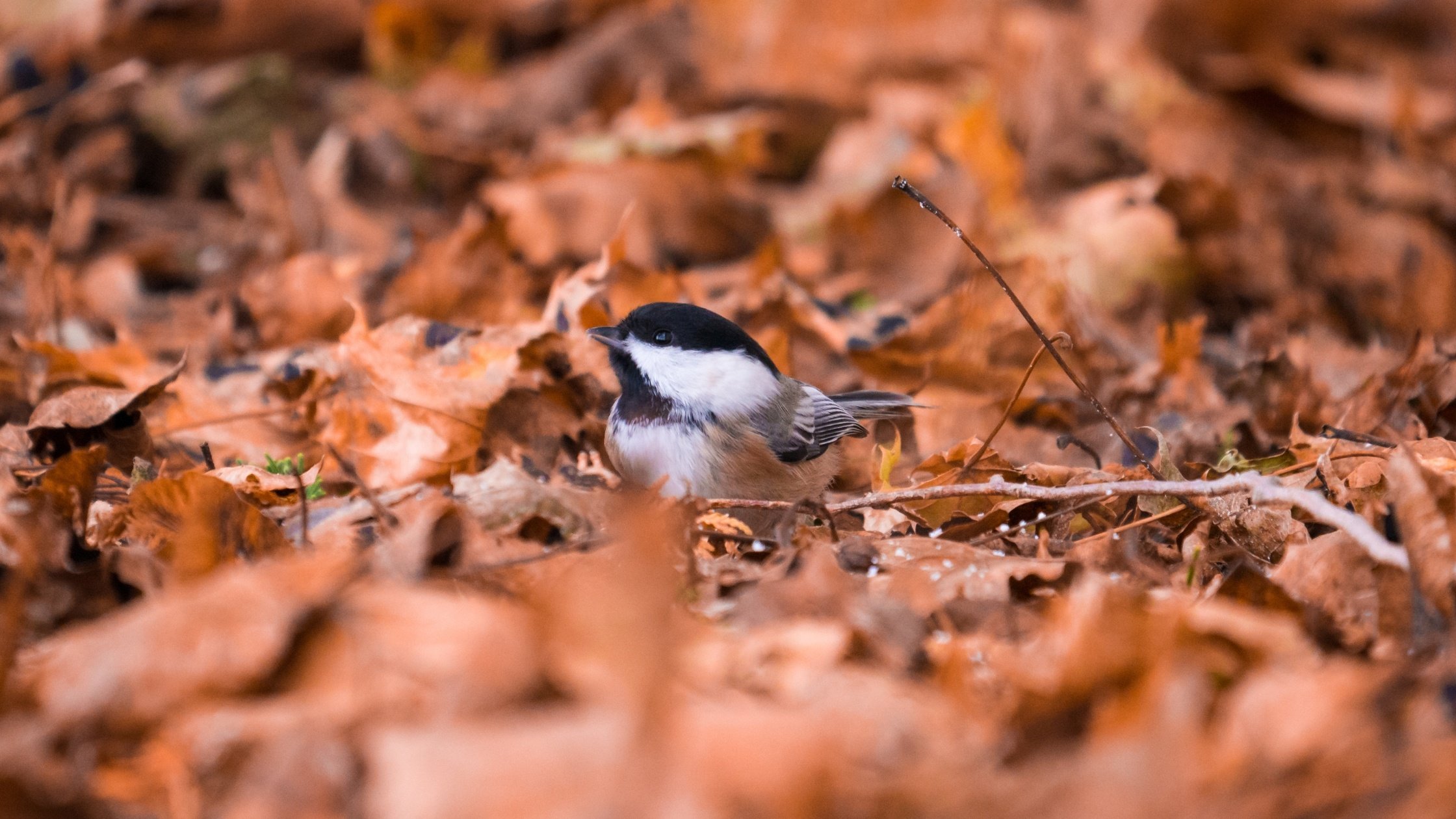
The environmental benefits of leaf litter go far beyond your garden budget. Fallen leaves create a critical micro-ecosystem—often called the "leaf litter layer"—that acts as winter shelter, a nursery, and a foraging ground for local wildlife.
- **Bumblebee Queens:** Queen bumblebees [burrow just under the leaf layer](https://content.gardenforwildlife.com/learn/everything-you-think-you-know-about-bees-is-wrong-and-how-to-help-them) to survive the winter. Endangered species like the rusty patched bumblebee rely directly on intact leaf cover.
- **Firefly Larvae:** The magical flashes of spring fireflies depend on moist leaf litter, where their larvae live and feed. [No leaf layer often means no fireflies](https://gardenforwildlife.com/blogs/learning-center/rekindling-the-glow-are-fireflies-declining).
- **Butterflies & Moths:** An estimated 94% of moth species overwinter in leaf litter as pupae, larvae, or adults. Luna moths wrap themselves in fallen leaves to form cocoons, while butterflies like mourning cloaks, commas, and question marks hibernate directly beneath them.
- **Amphibians, Reptiles & Small Mammals:** Salamanders, toads, box turtles, shrews, chipmunks, and eastern red bats use leaf litter for insulation, moisture, and protection. Without it, both adults and offspring lose essential winter habitat.
- **Songbirds:** Ground-nesting birds like Kentucky warblers and ovenbirds [build nests directly in leaves](https://content.gardenforwildlife.com/learn/how-to-create-a-bird-friendly-yard-with-native-plants), while robins and towhees rely on leaf-dwelling insects for food during cooler months.
## 3. Leaving Leaves Helps Fight Climate Change
Raking leaves isn't just a physical workout—it has a measurable climate impact. When organic matter like leaves decomposes in oxygen-deprived landfills, it produces **methane**, a greenhouse gas significantly more potent than carbon dioxide. Landfills are the third-largest source of human-related methane emissions in the U.S., with yard waste accounting for **10.5 million tons** of landfill material annually.
By keeping leaves on your property, you prevent methane emissions while sequestering carbon directly in your soil.

## 4. How to "Leave the Leaves" (Without Ruining Your Lawn)
"We're not saying leave your leaves on your lawn," Mizejewski clarifies. A thick carpet of whole leaves can block light, trap moisture, and smother turf grass. Instead, try these balanced strategies:
- **Rake into Beds:** Move leaves off lawns, driveways, and sidewalks into planting beds to serve as free, natural mulch.
- **[Shrink Your Lawn](https://content.gardenforwildlife.com/learn/less-lawn-more-life-5-weekend-projects-to-replace-your-lawn-with-native-plants):** Expand your garden beds or create new native plant areas, giving leaves more natural spaces to stay.
- **Compost the Surplus:** If you have more leaves than your garden beds can hold, build a simple compost pile on your property.
- **Use Municipal Composting Last:** If you must remove leaves, send them to a municipal yard-waste composting facility rather than the trash.
- **Ditch Gas-Powered Blowers:** Swap noisy, high-emission gas blowers for manual rakes or electric tools.
> **Pro-Tip for Curb Appeal:** Concerned about a messy yard? Add clean, intentional borders—such as stone edges, wood trim, or defined trench edges—around your garden beds. This signals to neighbors that your leaf layer is deliberate landscape management, not neglect.
## 
## Quick Guide: What NOT to Do
- **Don't bag leaves in plastic** or send organic material to landfills.
- **Don't dump leaves in wild natural areas**, which can smother native understory plants.
- **Don't burn leaves**, releasing stored carbon into the air and polluting local air quality.
- **Don't rely on gas leaf blowers**, which emit high levels of pollutants and disturb soil microbiology.
## 
## Small Changes, Big Impact
Leaving your leaves is one of the easiest, most cost-effective actions you can take to foster biodiversity and reduce your carbon footprint.
"If we all converted some of our lawn into natural beds filled with native plants that we use the leaves as natural mulch in, we can really make a huge difference," says Mizejewski.
Ready to learn more? [Watch the full webinar recording](https://www.youtube.com/live/2xymgtXaXXI) for expert tips, wildlife close-ups, and answers to common backyard gardening questions.
Share: [facebook-f icon](http://www.facebook.com/share.php?u=https://content.gardenforwildlife.com/learn/the-case-for-leaving-your-leaves-for-wildlife-this-fall) [linkedin-in icon](http://www.linkedin.com/shareArticle?mini=true&url=https://content.gardenforwildlife.com/learn/the-case-for-leaving-your-leaves-for-wildlife-this-fall) [twitter icon](https://twitter.com/intent/tweet?url=https://content.gardenforwildlife.com/learn/the-case-for-leaving-your-leaves-for-wildlife-this-fall) [pinterest-p icon](http://pinterest.com/pin/create/link/?url=https://content.gardenforwildlife.com/learn/the-case-for-leaving-your-leaves-for-wildlife-this-fall) [envelope icon](mailto:?body=https://content.gardenforwildlife.com/learn/the-case-for-leaving-your-leaves-for-wildlife-this-fall)
[Seasonal](https://content.gardenforwildlife.com/learn/tag/seasonal)
[The Case for Leaving Your Leaves for Wildlife This Fall](https://content.gardenforwildlife.com/learn/the-case-for-leaving-your-leaves-for-wildlife-this-fall)
Every autumn, millions of homeowners across North America spend hours raking, blowing, and bagging leaves—only to send t...
[Gardening](https://content.gardenforwildlife.com/learn/tag/gardening)
[Crape Myrtles on Every Block: What to Plant Instead](https://content.gardenforwildlife.com/learn/crape-myrtles-on-every-block-what-to-plant-instead)
Edited by David Mizejewski, National Wildlife Federation Naturalist Drive through almost any suburban neighborhood in th...
[Wildlife](https://content.gardenforwildlife.com/learn/tag/wildlife)
[How to Create a Bird-Friendly Yard with Native Plants](https://content.gardenforwildlife.com/learn/how-to-create-a-bird-friendly-yard-with-native-plants)
North America has lost 3 billion birds since 1970—nearly one-third of the entire population. While this statistic is ala...
[](http://gardenforwildlife.com)
[facebook-f icon](https://www.facebook.com/gardenforwildlife) [instagram icon](https://www.instagram.com/gardenforwildlife/) [Follow us on Facebook](https://www.youtube.com/@gardenforwildlife) [Follow us on Facebook](https://www.pinterest.com/gardenforwildlife/) [linkedin-in icon](https://www.linkedin.com/company/garden-for-wildlife/)
- [Shop](https://gardenforwildlife.com/)
- [Starter Kits](https://gardenforwildlife.com/collections/native-plant-collections)
- [Mix-and-Match](https://gardenforwildlife.com/collections/single-species-sets)
- [Best Sellers](https://gardenforwildlife.com/collections/best-selling-native-plants)
- Programs
- [Garden Donations](https://content.gardenforwildlife.com/about-us/impact/community-garden-donations)
- [Fundraising](https://content.gardenforwildlife.com/get-involved/fundraising)
- [Affiliate Partners](https://content.gardenforwildlife.com/get-involved/affiliates)
- Resources
- [Learning Center](https://content.gardenforwildlife.com/learn)
- [Plant Finder Quiz](https://gardenforwildlife.com/pages/find-native-plants)
- [Certified Wildlife Habitat®](https://certifiedwildlifehabitat.nwf.org?campaignid=WH25VSL)
- [Contact Us](https://content.gardenforwildlife.com/about-us/contact)
- [Help Center](https://gardenforwildlife.com/a/faqs)
*I was delighted to see how healthy the plants were and how carefully packed they were for shipping - Heidi M.*
Copyright © 2026, Garden for Wildlife | [Privacy Policy](https://gardenforwildlife.com/policies/privacy-policy) | [Terms of Service](https://gardenforwildlife.com/policies/terms-of-service)
Copyright © 2026, Garden for Wildlife
Privacy Policy | Terms of Service
```json
{
"@context" : "https://schema.org",
"@type" : "BlogPosting",
"author" : {
"@type" : "Person",
"name" : "Julie Anne Dellinger",
"url" : "https://content.gardenforwildlife.com/learn/author/julie-anne-dellinger"
},
"dateModified" : "2026-10-08T15:53:33.085Z",
"datePublished" : "2026-10-08T15:53:33.000Z",
"headline" : "The Case for Leaving Your Leaves for Wildlife This Fall",
"image" : [ "https://content.gardenforwildlife.com/hubfs/Canva%20images/Leaves%20Blog.png" ],
"mainEntityOfPage" : {
"@id" : "https://content.gardenforwildlife.com/learn/the-case-for-leaving-your-leaves-for-wildlife-this-fall",
"@type" : "WebPage"
},
"publisher" : {
"@type" : "Organization",
"logo" : {
"@type" : "ImageObject",
"url" : "https://content.gardenforwildlife.com/hubfs/GFW-logo-stacked-color.svg"
},
"name" : "Garden for Wildlife"
}
}
```