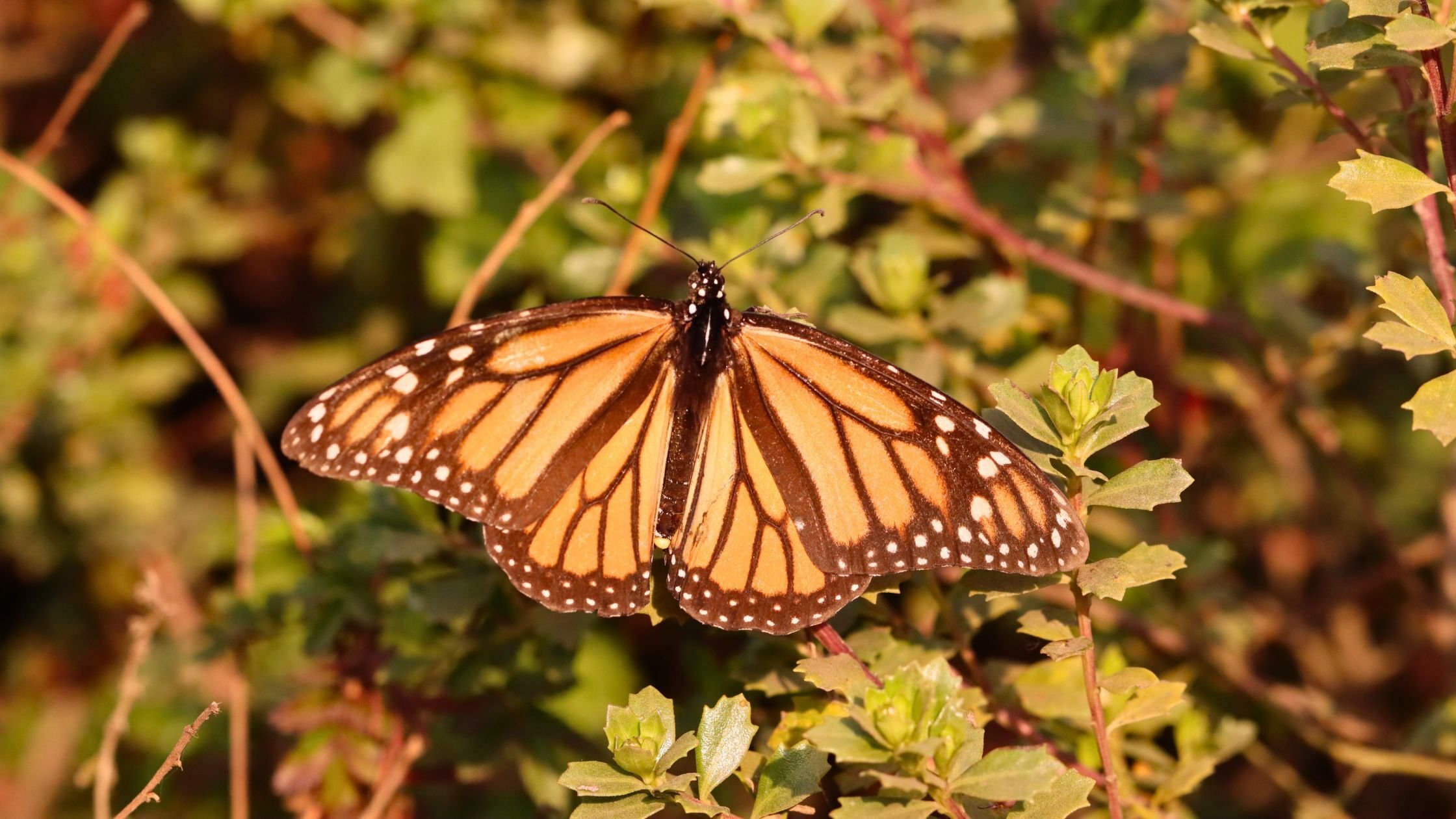

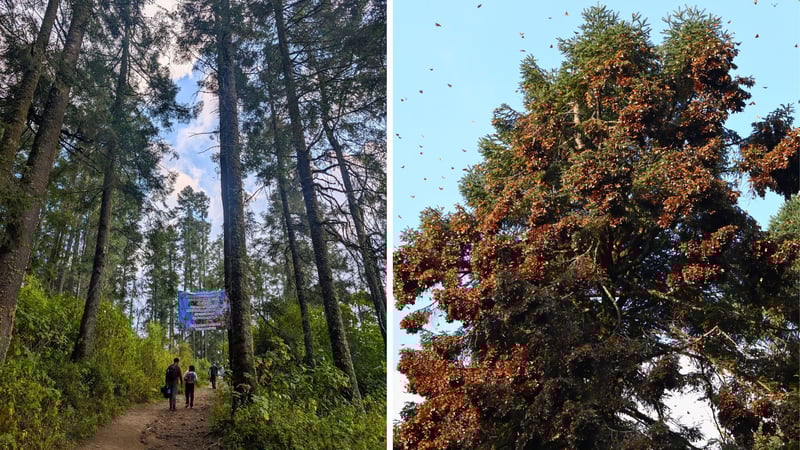
Earlier this month, our COO, Trisha Singh, traveled three hours outside of Mexico City into the high-altitude forests of the Sierra Madre Mountains. Her mission? To witness one of the most breathtaking natural spectacles on Earth: the monarch butterfly congregation.
As many of you know, monarchs are more than just beautiful visitors to our gardens—they are a symbol of resilience and a warning light for our ecosystem. In this post, Trisha shares her experience and a powerful message for our community.
The Sound of a Thousand Wings
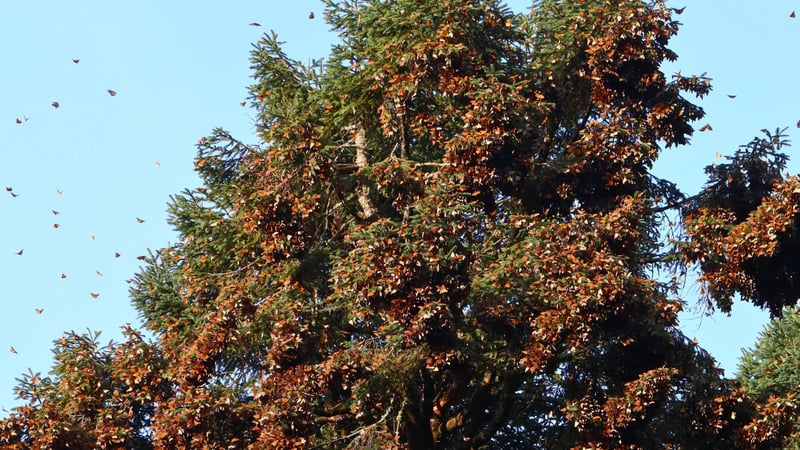
While many of us have seen the stunning close-up footage in nature documentaries, Trisha says nothing prepares you for the reality of standing in the Oyamel fir forests.
"It was incredible. When it would get really quiet and there was no wind, you could hear the butterflies. You could hear them fly. It was insane. It felt like a Disney movie—they were just everywhere, almost flying into your face the whole time."
These butterflies aren't just hanging on trees; they are active, feeding on nectar from local wildflowers to build the energy they need for the journey north. Trisha noted that the forest floor was alive with flowers similar to our own native species back home, like pussytoes and lyreleaf sage.
Those local varieties of nectar plants fueling the monarchs were likely a combination of Mexican Scarlet Sage (Salvia fulgens), Mexican Sage (Salvia mexicana), and Cudweed (Pseudognaphalium semiamplexicaule).
A Cycle of Generations
The monarchs Trisha saw in early January are the "super generation"—the fourth generation that lives up to nine months to make the grueling flight from North America to Mexico.
By mid-February, the forest enters a new phase. "Our guide told us that in February it’s even more spectacular because the mating process starts," Trisha explained. In March, the females begin the journey back north, reaching as far as Texas to lay the eggs of the first generation.
This is where we come in. Those butterflies—and the generations that follow—rely entirely on the "bridge" of habitat we build for them across the continent.
The Power of Collective Action
It can be easy to feel overwhelmed by the news of declining butterfly populations. But standing among millions of monarchs gave Trisha a different perspective.
"The biggest message is that it feels like such a big problem—what can one person do? But it is millions and billions of drops that form an ocean. That congregation didn’t happen because one person did a whole lot. It happened because many people did small things to protect and create enough habitat."
Every native plant you put in the ground matters. When you plant milkweed in your yard, you are providing a nursery. When you plant nectar-rich flowers, you are providing the fuel for their journey.
"There are a few butterflies that will make it to your garden who have fed on other people's gardens along the way. Everything we do has an impact. It’s important not to let despair take over, because that congregation is a really good example of what collective action can do."
How You Can Help This Spring
As the monarchs begin their migration north this March, they need our help more than ever.
-
Plant Native Milkweed: It is the only host plant for monarch caterpillars.
-
Don't Forget Nectar: Trisha’s big takeaway? "Please plant more nectar flowers! Our customers love milkweed, but the butterflies need those nectar sources to keep their energy up for the flight." Start with our Milkweed for Monarchs and Native Plants for Butterflies collections to find the right plant for the right place.
-
Create a "Stopover": Even a small patio pot with native blooms can be a vital rest stop for a migrating monarch. See how to container garden with native plants.
By adding a few native plants to your space this season, you’re doing more than just gardening—you’re becoming a vital part of a 3,000-mile journey and helping ensure this incredible natural wonder returns for generations to come.