

North America has lost 3 billion birds since 1970—nearly one-third of the entire population. While this statistic is alarming, there is hope: your garden choices directly impact bird survival.
David Mizejewski, Naturalist at the National Wildlife Federation, recently shared how homeowners can transform their landscapes into vital songbird habitats. The solution is simpler than you might think: plant native.
Why Birds Are Disappearing
The primary culprits behind declining bird populations include:
-
Habitat loss: Converting natural ecosystems into suburban development
-
Climate change: Altering ecosystems and migration timing
-
Pesticides: Eliminating essential insect populations
-
Sterile landscapes: Expansive lawns and non-native ornamentals that offer zero ecological value
Unlike many global conservation challenges, this is one we can solve right in our own backyards.
The Native Plant Connection
Plants form the foundation of the food web. While mature birds eat seeds and berries, 96% of backyard songbirds feed their chicks exclusively on insects and invertebrates.
This is where native plants become non-negotiable: 90% of plant-eating insects can only survive on native plants they co-evolved with over thousands of years. Your plant selection determines whether your yard can produce the food young birds need to survive.
Consider this comparison from Dr. Doug Tallamy's research:
| Tree Species | Ecological Value | Caterpillar Species Supported |
| Native Oak (Quercus) | High-value keystone species | 557 |
| Ginkgo (Ginkgo biloba) | Non-native ornamental | 0 |
The Staggering Scale of Insect Needs
A single pair of Carolina chickadees must catch 6,000 to 9,000 insects, primarily caterpillars, over just 16 days to raise a single brood and they forage entirely within a typical suburban neighborhood. Scale that up to larger birds like pileated woodpeckers, and native host plants for moths and butterflies become essential infrastructure.
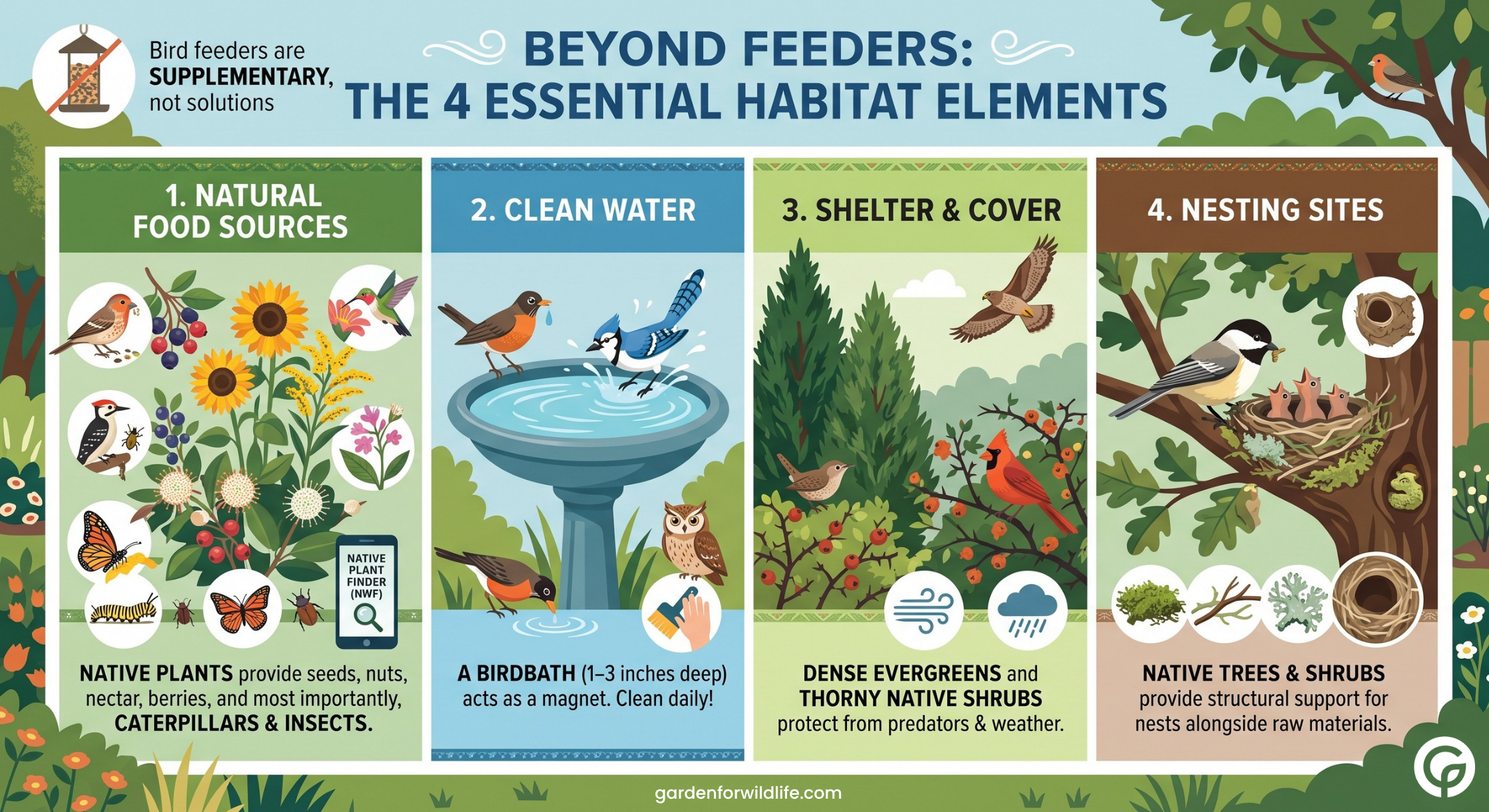
Beyond Feeders: The 4 Essential Habitat Elements
Bird feeders are supplementary, not solutions. Feeders attract only a handful of species, can spread disease if uncleaned, and primarily benefit human viewers.
Instead, focus on restoring the four core elements of a natural habitat:
-
Natural Food Sources: Native plants provide seeds, nuts, nectar, berries, and most importantly, caterpillars and insects. (Find native species for your ZIP code using the Native Plant Finder from the National Wildlife Federation.)
-
Clean Water: A birdbath (1–3 inches deep, cleaned daily) acts as a magnet for local wildlife. Even screech owls utilize backyard baths. During freezing winter spells, adding a heated birdbath keeps water accessible when natural sources are frozen solid. Don't worry about birds freezing their feet or getting stuck in the cold water; icy-cold water exists naturally, and birds are well-adapted to it.
-
Shelter & Cover: Dense evergreens and thorny native shrubs protect birds from predators and harsh weather.
-
Nesting Sites: Native trees and shrubs provide structural support for nests alongside raw materials like moss, lichen, and plant fibers.
Maximizing Your Impact
The 50–70% Native Plant Goal
Research shows that dedicating 50% to 70% of your property to native plants (by reducing mowed lawn) yields roughly 50% more birds and wildlife on your property.
Top Plant Selections
-
Trees: If you plant just one thing, plant an Oak tree. Oaks check three habitat boxes at once: caterpillar production, nesting sites, and winter acorns.
-
Perennials: Goldenrod (Solidago spp.) serves as a vital keystone perennial, supporting late-season pollinators, beneficial insects, and seed-eating birds.
Essential Wildlife-Safe Practices
Creating a habitat is also about what you don't do:
-
Eliminate pesticides: Avoid killing the food supply or exposing birds to toxic chemicals by treating your yard with pesticides.
-
Keep cats indoors: Free-ranging domestic cats kill up to 4 billion birds annually in North America alone. Keep the cats inside to save the birds.
-
Prevent window collisions: More than 1 billion birds die from glass strikes each year in the U.S. Apply visual decals or screens so birds recognize glass as a barrier.
-
Reduce night lighting: Turn off unnecessary outdoor lights during peak migration seasons so migrating birds aren't disoriented and drawn into hazardous areas.
-
Skip the unnatural nesting materials: There's no need to toss dryer lint, long string, or pet hair into the yard. These materials can trap moisture, entangle young nestlings, or expose birds to harmful pesticides. When you plant native trees and shrubs, wildlife will naturally find all the moss, twigs, and plant fibers they need.
Remember: birds don't need a handout—they need a habitat.
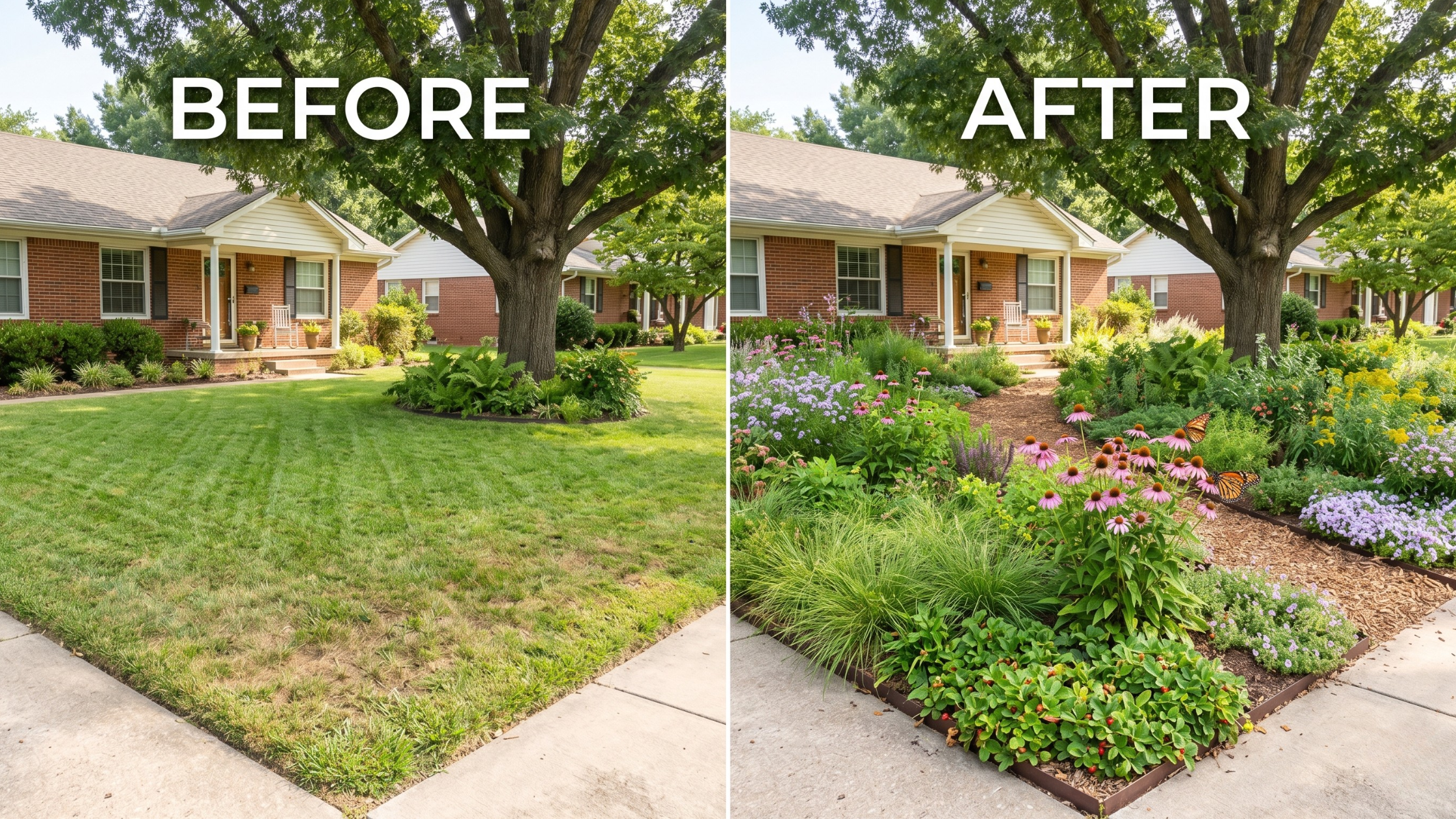
From Lawn to Living Sanctuary
Traditional American landscapes, which are dominated by turfgrass and exotic ornamentals, are ecological deserts. Swapping even a portion of lawn for native layers creates immediate, functional habitat. This applies to every scale: urban balconies, suburban yards, community gardens, or corporate campuses.
Next Steps
As David says, "plant more plants, specifically native plants." Visit gardenforwildlife.com today to filter by zip code and buy plants native to your region. We'll ship them directly to you!
Once you incorporate the four elements and commit to sustainable practices, you can officially register your yard as a National Wildlife Federation Certified Wildlife Habitat©.
Your yard can be part of the solution—one native plant at a time.