

Edited by David Mizejewski, National Wildlife Federation Naturalist
Walk into any home improvement store or garden center, and you are bound to see them: beautifully crafted wooden "bee hotels" or "bee houses." They are marketed as an easy, fashionable way to save the bees right in your backyard.
It is an incredibly tempting purchase for any nature lover. If you have already bought one and set it out, don’t beat yourself up! Watching a madhouse of busy bees buzzing in and out of a backyard structure is an incredible sight, and you shouldn't feel guilty for trying to help.
However, during our recent livestream for World Bee Day, National Wildlife Federation naturalist David Mizejewski dropped a truth bomb that might surprise you: When it comes to protecting native pollinators, you should skip the artificial bee hotel altogether.
While these pre-made structures feel like proactive conservation, the science shows that these artificial structures often do more harm than good. Here is why natural habitats are vastly superior, and how you can turn your garden into a true native bee sanctuary without spending a dime on plastic or processed lumber.
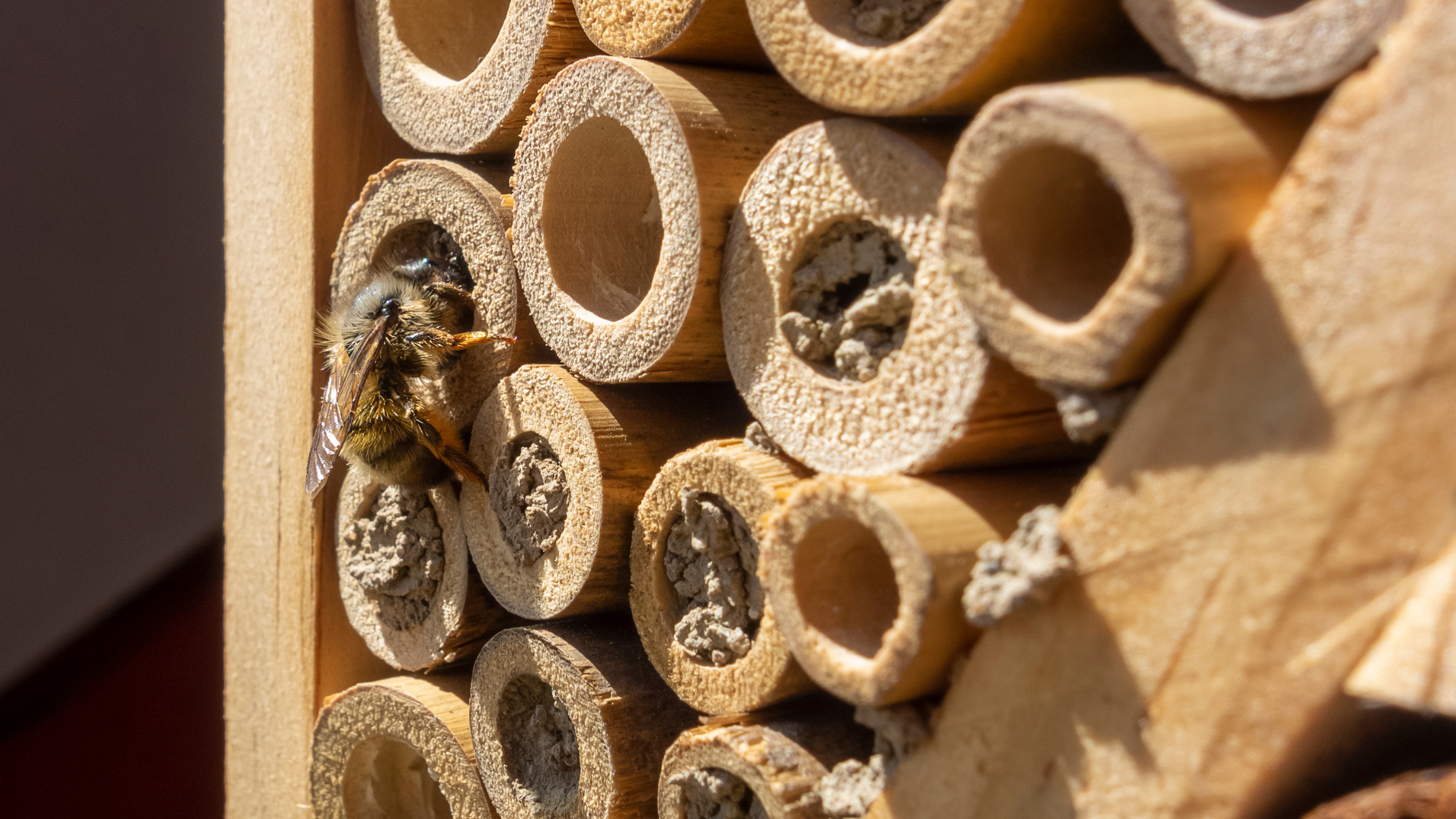
The Hidden Dangers of Artificial Bee Hotels
Solitary bees—which make up about 90% of our native bee species—are opportunistic nesters. They look for tiny, hollow tunnels to lay their eggs. On paper, a manufactured wooden block filled with paper straws or bamboo tubes seems like the perfect solution.
It’s also worth noting that not all artificial options are created equal:
-
Bee Houses/Hotels: These are hollow boxes filled with removable paper, cardboard, or reed tubes.
-
Nesting Blocks: These are solid blocks of wood with holes drilled directly into them.
While removable-tube hotels are high-maintenance, drilled wooden blocks are even worse. Because you cannot take them apart, there is virtually no way to harvest the cocoons, disinfect the wood, or clear out dead larvae and parasites. They quickly turn into permanent, toxic dead ends.
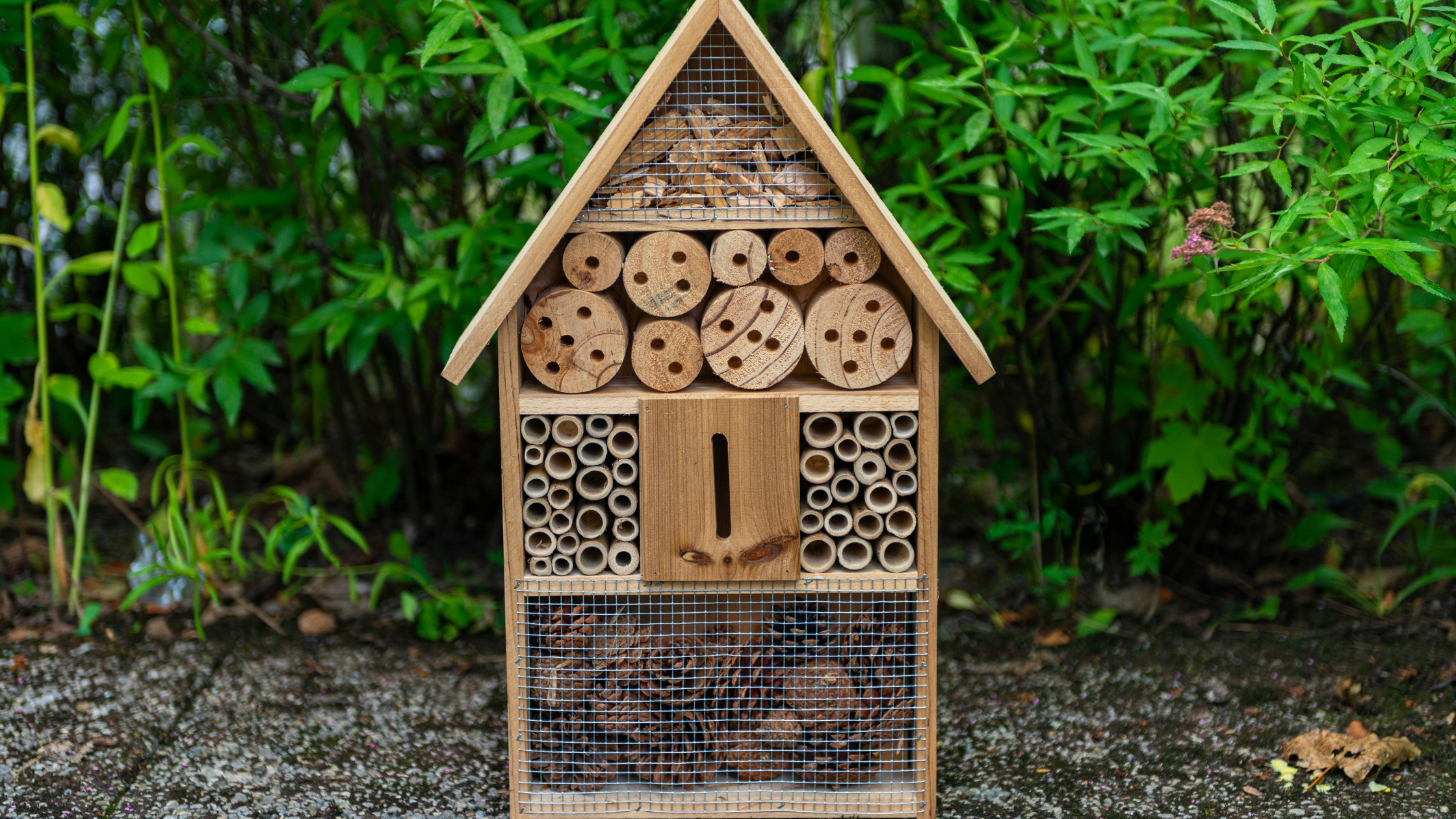
In reality, packing hundreds of wild, solitary bees into a single, dense structure creates a potentially dangerous ecological hazard:
-
The Parasite Breeding Ground: In the wild, solitary bees nest in low densities, spread far apart. When forced to congregate in a tight artificial space, it becomes incredibly easy for diseases, parasitic wasps, mites, and fungal pathogens to quickly spread and wipe out an entire generation of larvae.
-
The Predator Buffet: A highly visible bee house acting as a dense hub of insect activity is an easy target. Hungry woodpeckers, crows, and rodents quickly learn to treat these boxes like a backyard snack bar, easily dismantling the structure to eat all the cocoons inside.
-
The Glued-Tube Flaw: Many mass-produced commercial bee hotels feature nesting tubes that are permanently glued in place. If you cannot remove the tubes, you cannot clean the structure, turning them into permanent disease traps.
-
The Maintenance Nightmare: To keep an artificial hotel safe, homeowners must execute a rigorous maintenance schedule every autumn. This involves pulling the tubes, harvesting the cocoons, disinfecting them, storing them at precise humidity levels in a refrigerator, and completely replacing the tubes every single year.
"Now, I don’t know about you, I love the bees," David noted during a recent appearance on the joe gardener podcast. "That’s too much work for me. I would much prefer to let Mother Nature do the work."
What Native Bees Actually Want: Nature's Original Architecture
Instead of managing an artificial hotel that risks becoming a "sink" where bee eggs, larvae or pupae get diseased or eaten, the best move is to step back and let natural materials provide the original architecture.
You can easily provide these exact resources naturally through a few simple adjustments to your gardening routine.
1. Leave Standing Dead Stems (Permanently!)
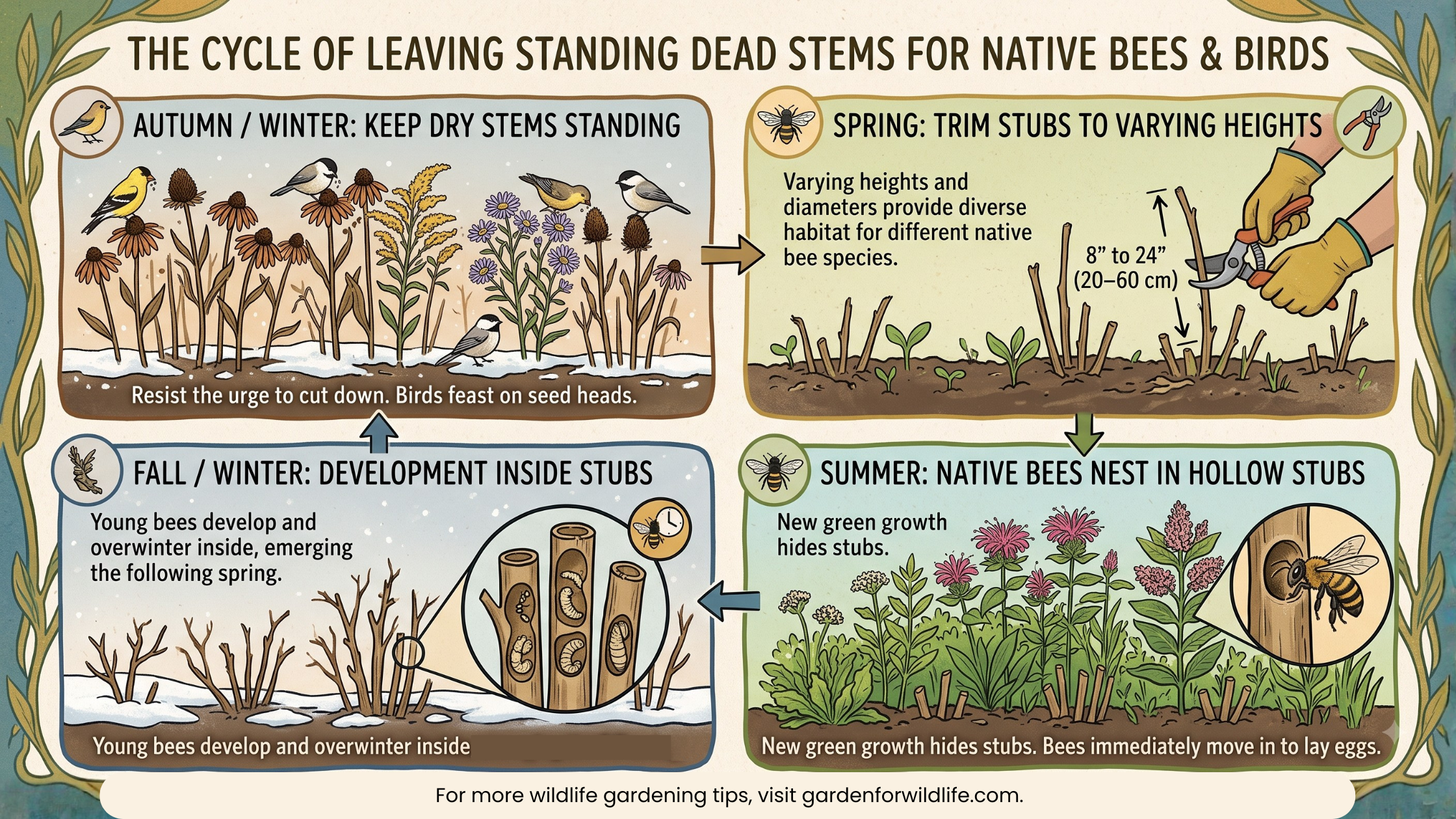
When autumn arrives, resist the urge to cut down your dead perennial flowers. Keep those dry stems standing all through the winter so local birds can feast on the seed heads.
In the spring, trim those old stems back to varying heights between 8 and 24 inches. Many native bee species nest in hollowed out plant stems. This variation provides a diversity of habitat, as different native bee species prefer different nesting heights and stem diameters.
The key is leaving those trimmed stubs in place year-round. Here is how the natural cycle works:
-
Spring: You trim last year's dead, dry stems to varying heights (8–24 inches). Bees immediately move into these dry, hollow stubs to lay eggs.
-
Summer: New green growth shoots up, naturally hiding the old stubs from view so your garden stays beautiful.
-
Fall/Winter: The young bees develop inside the stubs, and depending on the species, sometimes remain inside through the winter until emerging the following spring.
2. Save a Log, Save a Bee
If a tree or large branch falls on your property, don't rush to chip it or haul it away. Dead wood is full of life! Wood-boring beetles, carpenter ants, and woodpeckers naturally drill tiny, winding tunnels into dead or dying logs. Our native wood-nesting solitary bees rely heavily on these pre-existing cavities to raise their young. Tucking a rotting log into the back corner of a garden bed creates a perfect, zero-maintenance nursery.
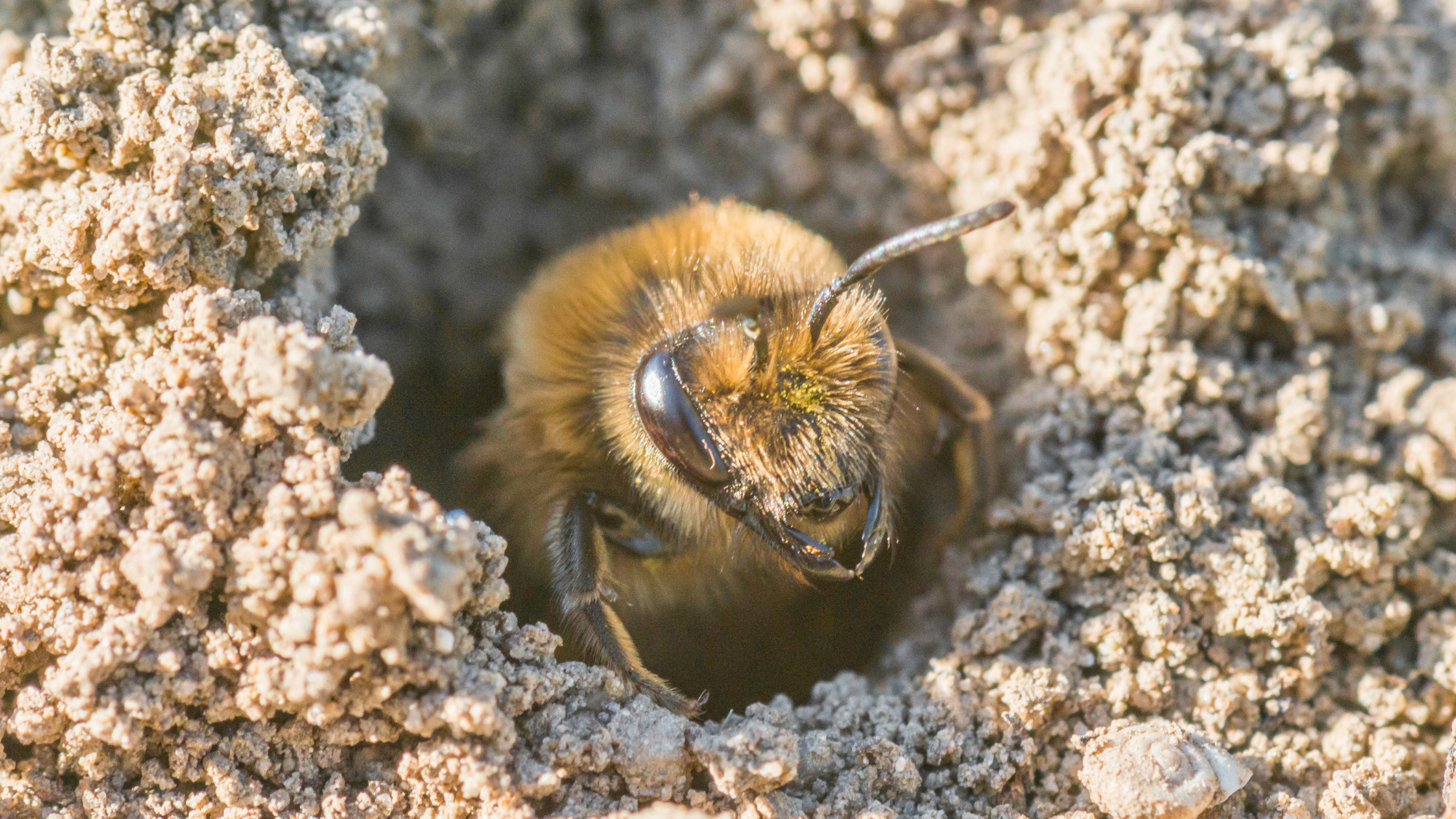
3. Keep Some Soil Bare (The Ground-Nester Priority)
While plant stems get a lot of attention, the truth is that about three-quarters of our native solitary bees don't nest in wood or stems at all—they dig their tunnels directly into the ground.
Covering every square inch of your property in thick turfgrass, heavy mulch, or synthetic weed fabric completely cuts off their access to the earth. Leaving a few sunny, open patches of bare, loose, or sandy soil completely uncovered in your garden beds is the single best thing you can do for the majority of your local pollinators.
4. Make a Splash with a Natural Mud Puddle
Many common native species, like mason bees, are natural bricklayers. The female bee flies out, collects wet mud, and carries it back to her nesting tunnel to build miniature, protective walls between each egg chamber.
Instead of buying plastic or processed kits, give these insects the actual construction materials they need. Simply fill a shallow flowerpot drainage dish with native clay soil, keep it moist during the spring nesting season, and watch the bees line up for a safe, natural building supply. (Just keep it damp rather than leaving standing water, which invites mosquitoes).
Let Nature Do the Work
True wildlife conservation isn't about buying plastic gadgets or cute cedar boxes to hang on your fence. It is about restoring the foundational ecosystems that wild animals evolved to rely on.
When you commit to a pesticide-free yard filled with a rich diversity of native plants, nature takes care of the rest. By leaving the leaves, preserving standing stems permanently, and allowing your soil to breathe, you will naturally support a flourishing, self-sustaining population of native pollinators—no cleanup, no refrigeration, and no artificial hotels required.
Want to start building a truly authentic, natural sanctuary at home? Check out our curated, pollinator-safe native plant collections at Garden For Wildlife to find the perfect host plants for your local bee species.